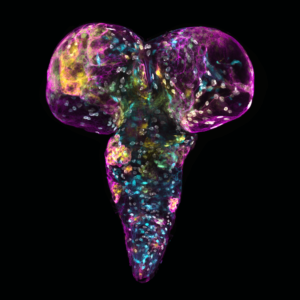
With Flying Colours
Glioblastoma (GBM), is a deadly form of brain cancer, with less than 5% of patients surviving 5 years after diagnosis. GBM tumours are composed of cells that each carry different genetic mutations, this is called tumour heterogeneity. Genetic variation within the tumour is widely accepted to be a reason behind the failure of cancer treatments leading to disease relapse. Cancer cells that remain in the brain after treatment can regrow the tumour mass over time, and often this new tumour is insensitive to previous treatments. Although GBM tumours have common mutations, each tumour is unique to each patient, and the genetic mutations present can vary greatly. By identifying the specific mutations present in a tumour, better suited therapies can be prescribed to each patient. Epidermal Growth Factor Receptor (EGFR), is commonly mutated in GBM (40-60% of patients). EGFR controls how cells grow and divide, but, when mutated, this can lead to the development of brain tumours. In GBM, mutated EGFR is constantly active, and interestingly, a single tumour can contain multiple types of mutated-EGFR. To better understand the importance of EGFR heterogeneity in GBM, we used advanced gene-editing techniques to create tumour models of GBM in the fruit fly, Drosophila melanogaster. In these models, “patches” of brain cells possess multiple forms of mutated-EGFR, which allows us to determine how these tumours behave, and the impact of EGFR heterogeneity on treatment outcomes. By identifying new therapeutic-agents that combat EGFR mutants, patients can be provided with an effective treatment course.
Visit
What's on
Learn and play
Youth Scheme
Quick links
Website by Hut Six Digital
