Can my gut health affect my mental health?
By Roberta
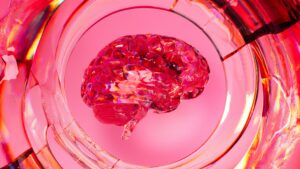
Has a certain situation ever make you “feel nauseous” or given you “butterflies” in your stomach? The use of these expressions is certainly not due to chance, in fact a very strong connection exists between our gut and brain, and vice versa.
For a really long time now, we have known that our mind can have an effect on our gut; for example, when we are feeling anxious we might get a “funny feeling” in our tummy or when we think of food, the thought alone can make our stomach rumble. However, what was less clearly understood until recently, is that our gut can influence our mind too.
In particular, researchers have found that the little bacteria inhabiting our gut are the primary mediators of this connection. Woah! You must be wondering, bacteria in my tummy?
Well, yes… As a matter of fact, not all bacteria are harmful and the ones in our gut can instead help us stay healthy, we fancily call them “Gut Microbiota”. They have a variety of functions, such as helping with the breakdown of nutrients and drugs, maintenance of our gut lining and protection against other harmful bacteria or viruses, all of which keeps us healthy almost literally, from head to toe!
When our gut microbiome is harmed or imbalanced, our overall mood can change. One way this can happen is if other bacteria, known as opportunistic bacteria, begin to proliferate in the gut disrupting our usual internal balance and causing inflammation. If the diversity of our microbiome is affected or inflammation is prolonged, this can have important repercussions on our mental health, for example by inducing stress and anxiety. We can avoid or even prevent these reactions by maintaining a diet that promotes variety within the gut bacteria and dampens inflammation. Such diets include a high fibre content, lots of antioxidants, and very few processed products that are rich in sugars and fats.
Another way our gut microbiota has been shown to improve our mental health is by producing Butyrate (byoo-tuh-rayt) an essential fatty acid that helps keep our gut barrier strong, reduce inflammation and promote brain cells growth. Butyrate is produced by gut bacteria primarily when we eat foods that promote the health and survival of our gut microbiome, such as fruits, vegetables, whole grains, and legumes. Lack of these nutrients, or unhealthy diets rich in processed meats and fried food which cause inflammation, can harm our microbiome and therefore lower the levels of Butyrate in our body, affecting both our gut and mind.
Finally, one more mechanism has been proposed. The brain and gut primarily communicate by means of a long nerve, the Vagus nerve. When the Vagus nerve is damaged, for example by inflammatory cells and molecules, proper communication between these two parts of our body is impaired, resulting in unpleasant effects on both our digestion and mental health.
Sometimes however, it is not enough to simply keep a healthy diet if we are really unwell. In these circumstances the use of probiotics, a mixture of good, live bacteria that would normally inhabit our body, can help restore the gut microbiota and make us feel better. Probiotics can usually be added to yoghurts or can be taken as supplements, and because they consist of bacteria that are not harmful to us, they can also be used regularly to keep both our tummy and mind happy!



Visit
What's on
Learn and play
Youth Scheme
Quick links
Website by Hut Six Digital
