How does nitrous oxide damage nerve cells?
By Devan

Have you seen these shiny metal canisters on the ground? Maybe on the roadside? These contained nitrous oxide, or N2O.
Nitrous oxide is a colourless gas which is used in healthcare for pain relief and anaesthesia. It is also used in rocket fuel, and in the catering industry. Some people choose to use nitrous oxide recreationally as a drug and often call it by other names such as nos, balloons, and Smartwhip.
Imagine this situation; a young person is helped to the emergency department by his friend. He has pins and needles in his hands and toes and is struggling to walk. He has also noticed that he cannot lift things that he normally can. He tells the doctors he has been taking nitrous oxide.
What has happened here? It turns out that nitrous oxide can cause damage to the nerves in the spinal cord! Nerves are the super-fast messenger cells of the body. The spinal cord is a thick bundle of nerve cells that stretches from your brain down your back, protected by the 33 bones of the spine. Smaller nerves branch off of the spinal cord all along your back, going to all of the important areas of your body including your limbs and organs.
Think of our spinal cord as a big motorway of nerves running between the brain and the rest of our body, with nerves allowing the super-fast transmission of messages. Nitrous oxide causes damage to nerves, and the nerves in the spinal cord seem to be especially vulnerable. N2O can stop the formation of the fatty myelin layer that surrounds nerves which normally insulates the nerves, and allows for that super-fast jumping of messages around the body [pictured below]. This results in the symptoms described above such as numbness, difficulty walking and weakness. However, other symptoms can also occur including loss of control over the bladder and bowels and electric-shock feelings. The way that myelin is stopped from forming is by nitrous oxide inactivating Vitamin B 12. This is used by your body for many things, including forming that fatty myelin layer. N2O turns off B12 meaning that myelin can no longer form, causing the symptoms as the messages sent along nerves are disrupted.
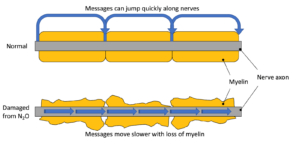
Lots of young people all around the country are coming to hospitals with this sort of nerve damage from nitrous oxide. Some of them have not been using much nitrous oxide at all, but not all of them were aware of the risks to your nerves and spinal cord from N2O. So if you, or someone you know, ends up using nitrous oxide, you should notice the symptoms like numbness or tingling and get emergency help from your local emergency department or GP. They will likely give injections to replace B12, however, these are thought to work best if nitrous oxide use is completely stopped. Educating yourself and others about the risks of nitrous oxide to nerves can help raise awareness, and maybe prevent damage to someone’s spinal cord!



Visit
What's on
Learn and play
Youth Scheme
Quick links
Website by Hut Six Digital
