Medical Student Placements
By Roberta
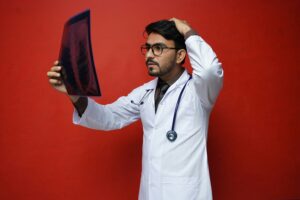
Today’s medical students are tomorrow’s doctors, so it’s important that they begin to familiarise themselves with the clinical environment already from their early teaching years. Placements are in fact a great opportunity for students to develop skills that are crucial to the profession such as physical examination, history taking and communication skills. This is also the time to learn about professionalism in medicine and ask questions to other members of the healthcare team about their roles and specialties, so that when students graduate and start working all of this will already be well known to them.
There are two main types of placements that medical students undertake: hospital placement and GP placement. The former allows student to spend increasing amounts of time on hospital wards, shadowing practitioners but also getting actively involved in the care of patients, based on their skill set. This type of placement typically begins in the later medical years, usually starting in year 3, and for some universities year 4. GP placement on the other hand, can start early, already from year 1. This is because the general practice friendly and familiar environment is a great opportunity for students to refine and learn new communication skills and ease themselves into the profession. GP placement continues until the end of their medical course, because it is so crucial to the maturation of good communication skills and therefore rapport, with patients.
Students aren’t left on their own at any point of their placement rotations; they are constantly guided by members of the healthcare team. As they become more experienced towards the final years, they are given increasingly more autonomy in the assessment and management of patients, although their decisions are always matched to those of a more senior doctor. Nonetheless, this opportunity of independent decision making encourages critical thinking and eases them into the shoes of their future selves.
Surely placements have been designed to be a formative experience, but they are also an incredibly exciting time for students. For many of them, this will be the first time they step into the clinical environment and get to work along the side of healthcare professionals. There is plenty to learn but also plenty of opportunities to apply what has been learned, and this can be very gratifying for students as it allows them to actively visualise their progress through medical school. Placement experiences encompass a wide range of medical specialties, not only to match the teaching at university, but also to get students started on thinking about their future paths. There are plenty of opportunities and time to change their mind about what this could be, but it will allow them to have a clearer picture when the moment to choose comes.
Because of our changing times and the fast steps we are taking towards technology, placements these days involve a variety of new opportunities that weren’t available before. Students will learn how to consult with patients on the phone or on videocalls, meet online with members of the healthcare team from a number of different specialties and locations, and appreciate the use of new technological advancements in the healthcare field. Time on placement is a truly thrilling time and in the blink of an eye, students will soon find themselves to be the doctors of the future.