What is a placenta?
By Anoushka

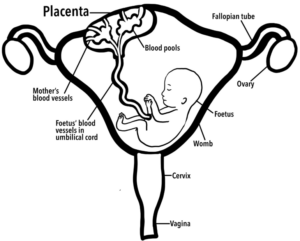
The placenta is a small organ that connects the inner wall of a pregnant woman’s womb to a foetus’ umbilical cord. The placenta contains cells, blood vessels and blood ‘pools’. Blood pools are pools of blood within the placenta.
Blood from the foetus travels through blood vessels called umbilical veins within the umbilical cord into the blood pools within the placenta, which also contain blood from the mother.
Blood vessels called umbilical arteries take blood, containing oxygen and important nutrients from the mother, from the pools back to the foetus. Blood vessels in the placenta take blood, containing waste products such as carbon dioxide, from the foetus from the pools back to the mother.
Clearly, exchange performed at placenta blood pools isn’t a fair one – the mother gives valuable oxygen and nutrients to the foetus, but receives the foetus’ discarded waste products in return!
There’s a few things that can go wrong with the placenta, described below. They occur at different stages during the pregnancy and some are more dangerous than others.
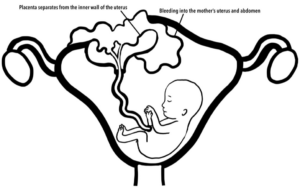
The most dangerous is Placental Abruption – where the placenta separates from the inner wall of the uterus. Placental abduction can be fatal for the mother, who can suffer severe bleeding into her abdomen, and for the foetus who loses its supply of oxygen and nutrients.
Pregnant women with placental abruption develop sudden severe abdominal pain, decreased blood pressure and a hard abdomen.
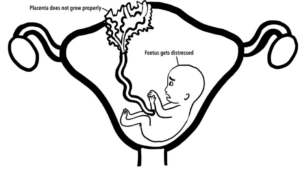
The most common is Pre-Eclampsia – which occurs when the placenta does not grow properly. This makes the foetus distressed due to deficiency of oxygen and nutrients. The distressed foetus releases various chemicals into the placenta that reach the mother’s blood. These chemicals cause the mother to develop high blood pressure, kidney failure, and swollen hands or feet.
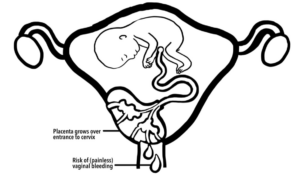
The least painful is placenta praevia – when the placenta grows too close to the cervix (where the foetus will exit when they are born). This can cause painless vaginal bleeding during the final three months of a pregnancy. Sometime, and more dangerously, the placenta can block the cervix.
It is very important that doctors are good at noticing the signs of different placenta abnormalities, because they can all be dangerous if not treated correctly.


Visit
What's on
Learn and play
Youth Scheme
Quick links
Website by Hut Six Digital
