What is a stoma?
By Anoushka
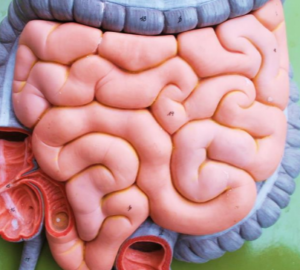
In Greek, stoma means mouth. In medicine, it arguably means the opposite: A stoma is a part of the intestine that is deliberately made to protrude out of the abdomen, following surgery to remove severely damaged sections of the intestine. Possible sources of damage include autoimmune diseases, infections, lack of oxygen, structural abnormalities, and cancers.
When a patient with a stoma eats food, it travels through their intestine and out through the stoma. Then, it falls into a small bag attached to the stoma. When the bag is full, the patient empties its contents into the toilet.
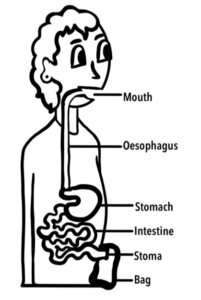
There are three ways to classify the different types of stoma:
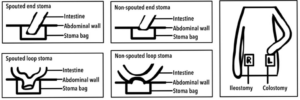
- Which bit of the intestine makes the stoma? Small-intestine stomas are called ileostomies (pronounced ill-ee-oss-tow-mees)and they emerge in the lower right hand side of the abdomen. The contents of an ileostomy bag is a thin liquid (similar to vomit). Large-intestine stomas are called colostomies; they emerge on the lower left side of the abdomen. Colostomy bags contain thick, semi-solid contents (similar to poo).
- Does the stoma have a ‘spout’? A spouted stoma sticks out beyond the abdomen skin whereas a non-spouted stoma does not. The spout protects the abdomen skin from touching the stoma bag contents. This is necessary for ileostomies because the small intestine contains chemicals called digestive enzymes that are fabulous at digesting food, but notoriously harmful to human skin.
- Is it a ‘loop’ stoma or an ‘end’ stoma? An end stoma is made from a complete break in the intestine,whereasa loop stoma is made from a loop of intestine, so that consecutive bits of intestine remain attached. The surgeons’ decision whether to give a patient a loop or end stoma depends on how much of the patient’s intestine is damaged, and whether their stoma might be removed in the future. Larger sections of damaged intestines that are damaged enough to need removal usually require end stomas, and loop stomas can be removed during surgery where the adjacent bits of intestine either side of the stoma are sewn back together.
What is it like for patients with stomas? Having a stoma is a big commitment – patients are responsible for keeping the skin around the stoma clean, changing their stoma bags regularly, and modifying their diet to be digestible for their limited length of intestine. Many patients – especially at first – can find this disconcerting and overwhelming. Therefore, it is very important to give patients with stomas lots of support and guidance.
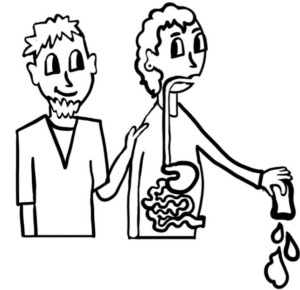
Nevertheless, intestine removal with stoma formation remains a form of life-saving surgery. According to the British journal of nursing in 2021, 200,000 UK residents are currently living with stomas.



Visit
What's on
Learn and play
Youth Scheme
Quick links
Website by Hut Six Digital
