Can adults get zits?
By Anoushka

The official medical name for zits is Acne. This involves red or yellow spots, sometimes with black dots on top, found on the face, chest and back. Acne usually occurs in teenagers going through puberty.
This is because as teenagers grow, their sweat glands grow too, producing lots of thick liquid called sebum which clogs up sweat glands, trapping bacteria inside them. The immune system reacts to the bacteria by causing inflammation (hence the border of a zit is red) and making pus (hence the middle of a zit is yellow) which can dry up to make a crusty black dot called a ‘blackhead’.
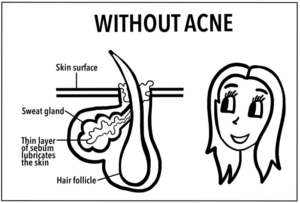
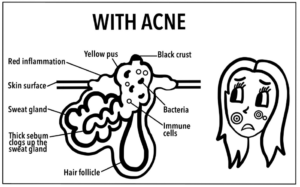
There is a version of Acne called Rosacea that’s found in middle-aged adults. Rosacea involves similar features to Acne, including flushing (because blood vessels dilate to cause inflammation), zits (if too much bacteria grows inside sweat glands), and greasy skin (if sweat glands grow and produce too much sebum).
How are Acne and Rosacea treated?
Medications for acne and rosacea take the form of tablets or creams.
- Creams made from chemicals called benzoyl peroxide and salicylic acid unblock clogged up sweat glands.
- Tablets or creams containing antibiotics called tetracyclines suppress inflammation.
- A tablet called brimonidine reduces inflammation in Rosacea by making blood vessels narrower.
- Tablets or creams containing chemicals called retinoids kill cells that make sebum.
Medicines for Acne and Rosacea are very effective but usually take weeks or months to work. Patients usually have symptoms of Acne and Rosacea for months or years and there’s a huge variation in symptoms between patients.
In conclusion, if you have not yet suffered from a zit, you almost definitely will in the future! Although rosacea is rare, acne is very common but luckily, both are treatable