How do kidneys work?
By Anoushka
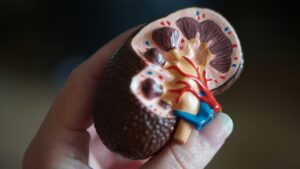
The main job of a kidney is to regulate the concentration of soluble chemicals in the blood (a soluble chemical is one that can dissolve) by moving unwanted soluble chemicals into the urine.
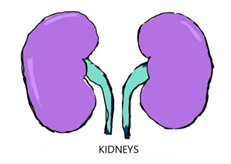
Most people have two kidneys. Rarely, people are born with three kidneys and others may survive with only one kidney while carefully maintaining a healthy lifestyle.
Soluble chemicals (for example potassium, sodium, urea, phosphate and calcium) have important functions – for example, ensuring a healthy heart rhythm, sufficient bone strength, normal blood pressure, and the correct distribution of water around the body.
Here is what happens inside a kidney
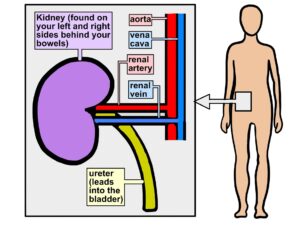
- Blood flows into the kidney through the renal artery.
- This blood has the incorrect concentrations of soluble chemicals.
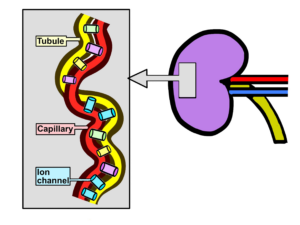
- Blood flows through the kidney inside tiny pipes called capillaries, which are next to other tiny pipes called tubules.
- Ion pumps and channels are special gaps in the walls of capillaries and tubules which let water or soluble chemicals move between the capillaries and the tubules.
- Tubules contain water and soluble chemicals that are not needed in the blood – fluid inside the tubules becomes urine.
- Blood flows out of the kidney when all the tiny capillaries join to make the renal vein.
- Blood in the renal vein has the correct concentrations of soluble chemicals.
- Meanwhile, all the tiny tubules join to form a big tube called the urethra, which carries urine towards the bladder.
What happens when your kidneys don’t work?
If your kidneys don’t work, your blood contains incorrect concentrations of soluble chemicals. Potentially, this can cause harm. For example, incorrect potassium concentration produces abnormal heart rhythms, incorrect sodium concentration causes abnormal distribution of water around the body, incorrect calcium and phosphate concentrations reduce bone strength, a high urea concentration yields itchy skin and a painful joint disease called gout.
There are multiple temporary and permanent reasons why a kidney may stop working, each with different medical treatments and useful lifestyle advice.
Meanwhile, there are many more miraculous intricacies and subtle nuances underlying kidney function than aren’t mentioned in this introductory article. Good luck on your quest to learn more about how kidneys work!