What is dialysis?
By Anoushka
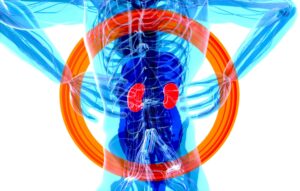
Dialysis is a treatment given to patients whose kidneys do not work even after they have taken appropriate medications and followed lifestyle advice.
During dialysis, a patient is connected to a dialysis machine which carries out the function of a kidney: correcting concentrations of soluble chemicals in the blood (for more information, read my previous article, How do kidneys work?)
Dialysis machines require the following key components:
- Dialysate fluid:
- This contains water infused with specific concentrations soluble chemicals. During dialysis, soluble chemicals move from the dialysate fluid into the patient’s blood and vice versa, until blood and dialysate fluid have identical concentrations of each soluble chemical.
- Catheter:
- This is a small plastic device with one end inside the patient’s body and the other end sticking out of the patient, for connecting to the dialysis machine. The catheter remains in place all the time (even when the patient is not having dialysis).
There are two main types of dialysis – (perry – toe – kneel) dialysis. Patients may choose which type of dialysis to have, aided by discussion with a doctor:
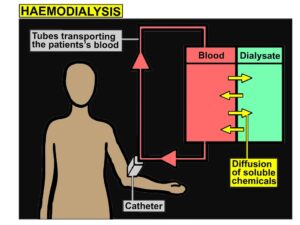
- In Haemodialysis, blood flows out of the patient’s arm through their catheter into the dialysis machine. Soluble chemicals diffuse between the patient’s blood and the dialysate fluid across a specially designed membrane within the dialysis machine. Blood with the correct concentrations of soluble chemicals returns from the dialysis machine to the patient’s arm. Usually, patients visit hospital 3 times per week to receive haemodialysis for 4 hours at a time.
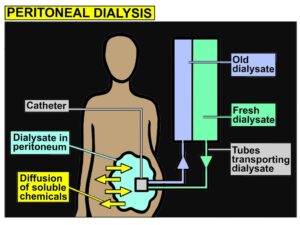
- In peritoneal (perry/ toe/ kneel) dialysis, dialysate fluid passes from the dialysis machine through the patient’s catheter into the patient’s peritoneum (a thin layer of fat deep inside in your abdomen which covers your intestines). Soluble chemicals diffuse between blood and dialysate fluid through tiny holes in blood vessel walls and gaps in-between cells. Dialysate in the peritoneum is continuously refreshed by the dialysis machine. Once the patient’s blood has improved concentrations of soluble chemicals, the dialysate fluid is removed from the patient’s peritoneum and the patient may disconnect from the machine.
- Patients may keep peritoneal dialysis machines at home and connect themselves to the machine overnight while they are sleeping.
Dialysis is a life-saving treatment. However, it is a huge time commitment for patients (12 hours per week spent in hospital for Haemodialysis or sleeping with a chunky machine every night for peritoneal dialysis). Additionally, the long-term catheter (in an arm for haemodialysis or in the abdomen for peritoneal dialysis) may get infected with bacteria – especially if those bacteria consume glucose within the dialysate fluid and use the energy to reproduce more.
Scientists and Bioengineers researching dialysis aim to make it faster, safer, and easier for patients.